LEARN · GLOSSARY
Architectural Rendering Glossary: 30 Terms Explained
Published 8 min read
Architectural rendering mixes vocabulary from architecture, photography, computer graphics and now AI. This glossary explains 30 terms you will meet in archviz and AI rendering, in plain language and in alphabetical order.
New to the topic? Start with what is architectural rendering and what is archviz.
- Aerial rendering
- A rendering from a high, bird's-eye viewpoint that shows a building in its surroundings or a whole masterplan.
- Ambient occlusion (AO)
- Soft shading where surfaces meet or are close together, which adds depth and makes objects feel grounded.
- Archviz
- Short for architectural visualization: producing images, animations and interactive experiences of architecture before it is built.
- Aspect ratio
- The proportion between image width and height, such as 16:9 for slides or 1:1 for social media.
- Clay render
- A render with every surface in one matte, neutral material, used to judge form, massing and shadows without materials.
- Composition
- How the elements of an image are arranged in the frame: camera height, lens, framing, foreground and background.
- Denoising
- Removing the grainy noise that appears in ray-traced renders when too few light samples are calculated.
- Entourage
- People, vehicles, furniture and vegetation added to a rendering to give it scale and life.
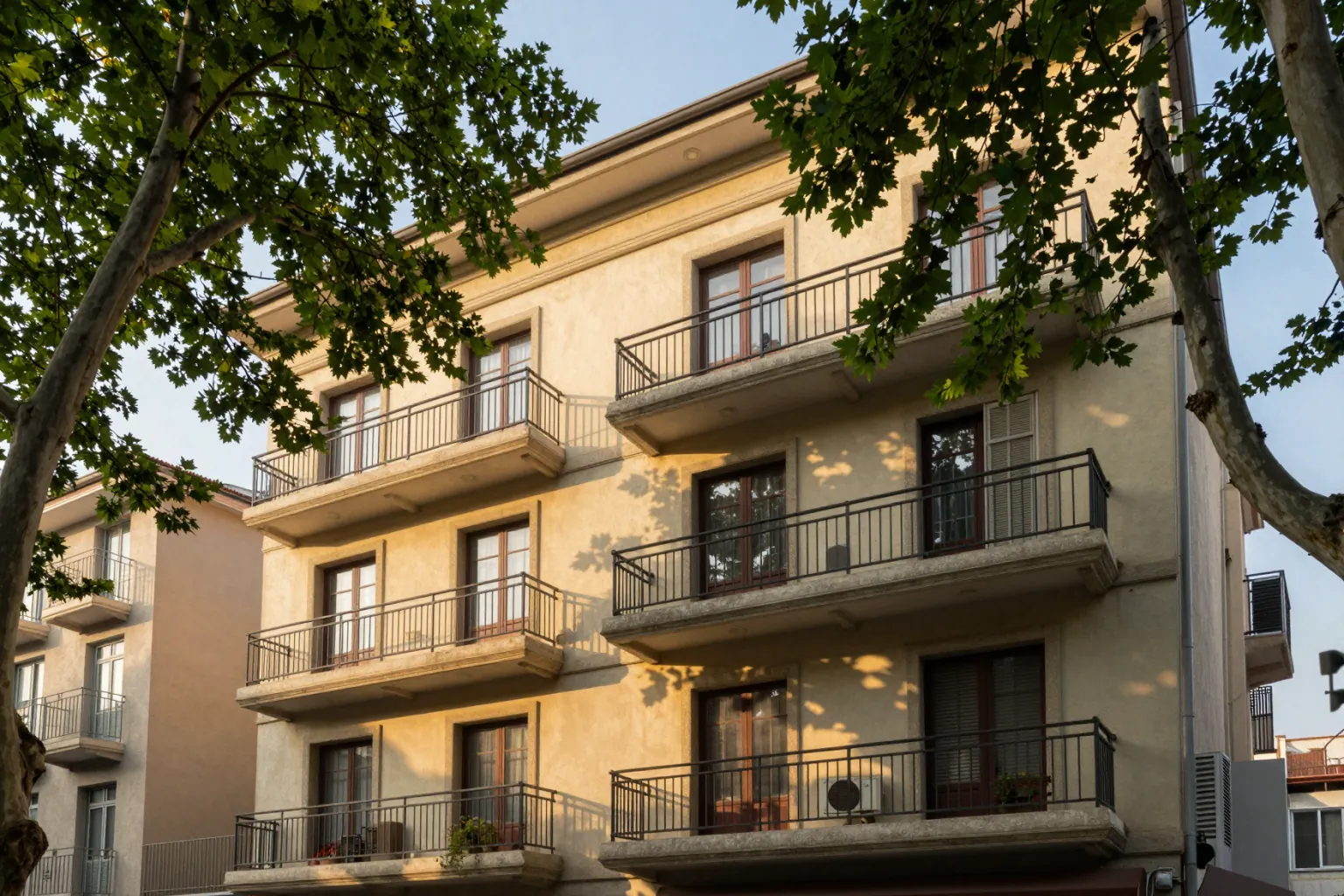
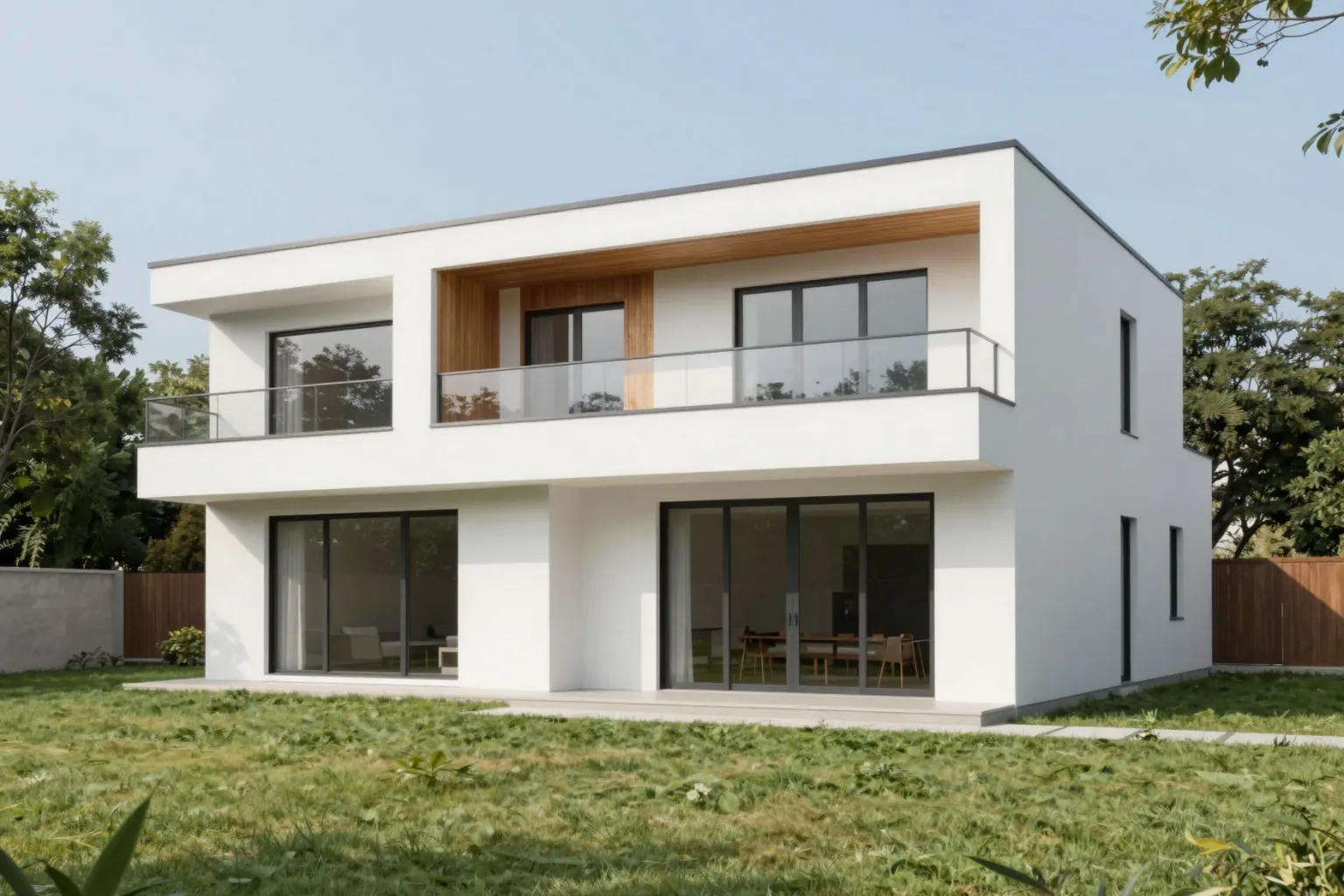
- Exterior rendering
- A rendering of the outside of a building in its setting: facade, materials, landscape and sky.
- Global illumination (GI)
- Simulation of light bouncing between surfaces, which produces the soft, indirect light that makes renders realistic.
- HDRI
- A high dynamic range panoramic image used to light a 3D scene and provide a realistic sky and reflections.
- Image to video
- Generating a short video from a still image by adding camera motion and movement in the scene.
- Inpainting (masked editing)
- AI editing where you select an area of an image and only that area is regenerated according to your instruction.
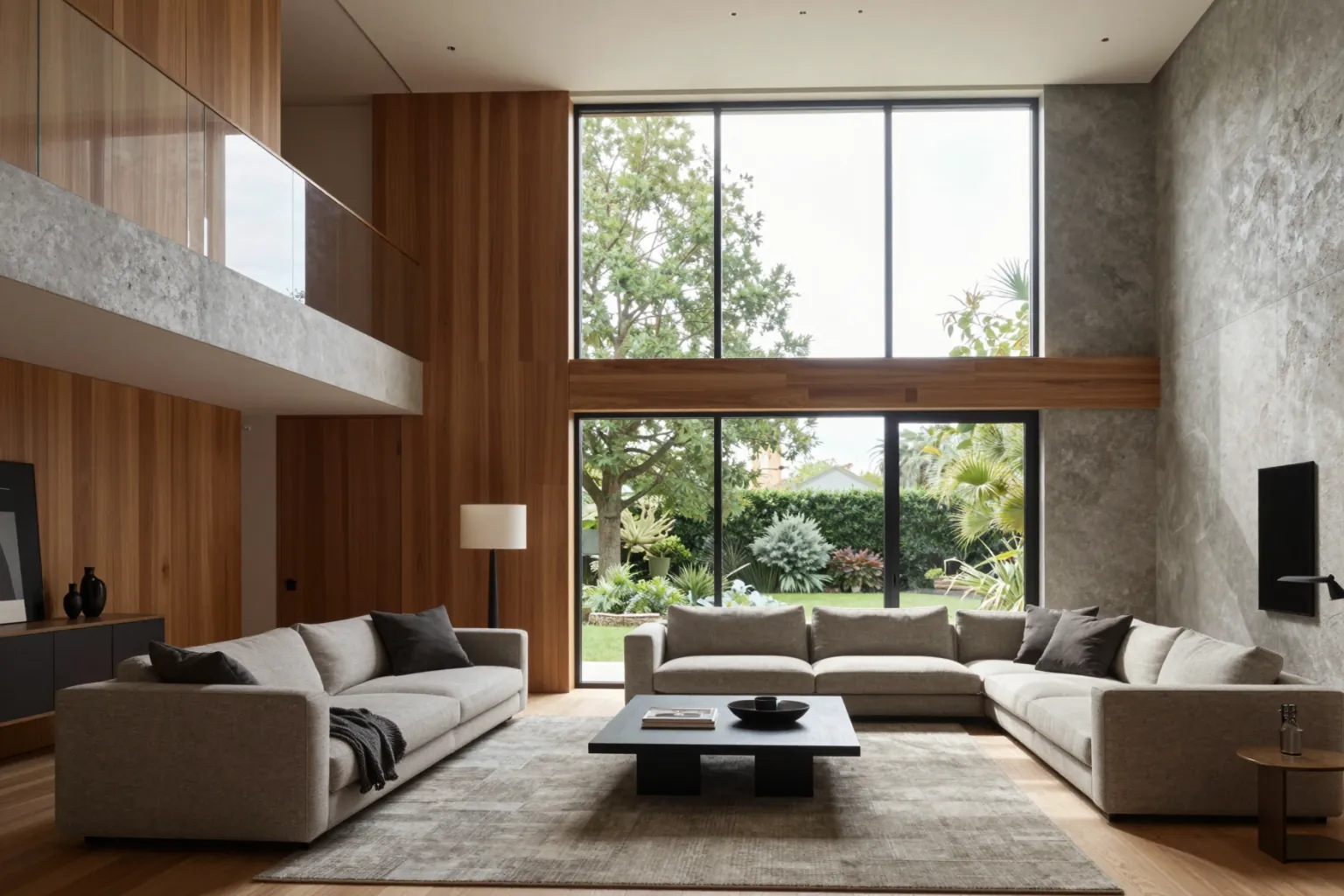
- Interior rendering
- A rendering of an interior space with furniture, finishes and lighting.
- Maskless editing
- AI editing that applies a plain-language instruction to the whole image, ideal for lighting, season or style changes.
- Massing model
- A simple 3D model showing the overall volumes of a building without detail, used early in design.
- Multi-reference editing
- AI editing that brings elements from several reference images, such as a fabric or a tile, into one scene.
- Photorealistic rendering
- A rendering intended to be indistinguishable from a photograph.
- Physically based rendering (PBR)
- A material and lighting approach that models how real surfaces reflect and absorb light, for consistent realism.
- Post-production
- Editing a rendered image afterwards: color grading, adding atmosphere, people or vegetation.
- Prompt
- The text description given to an AI model that describes the image to generate or the change to make.
- Ray tracing
- A rendering technique that follows the paths of light rays through a scene to calculate realistic lighting, reflections and shadows.
- Real-time rendering
- Rendering fast enough to update instantly as you move through a scene, used for walkthroughs and design reviews.
- Render engine
- The software that calculates the final image from a 3D scene's geometry, materials, lights and cameras.
- Sketch to render
- Turning a hand sketch or line drawing into a photorealistic image, today usually with AI.
- Text to image
- Generating an image from a written description alone, with no input image.
- Text to 3D / image to 3D
- Generating a 3D model, with materials, from a text description or a single photo.
- Texture mapping
- Wrapping 2D images onto 3D surfaces so they show materials such as wood grain, brick or fabric.
- Virtual staging
- Adding furniture and decor to a photo of an empty room so buyers or tenants can picture it furnished.
- Walkthrough
- An animation that moves the camera through or around a building to show it as a visitor would experience it.